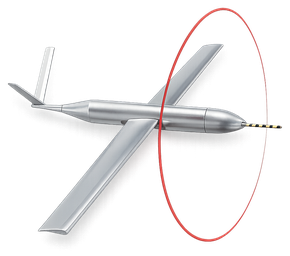

UAS News Podcast — 2015-08-12
Transcript
Hello and welcome to the next installment of the UAS News Podcast series where we interview newsmakers and discuss the news and applications relevant to the global unmanned technologies community. I am your program host, Patrick Egan. Let's say hello and welcome to our co-host, as we always do, Mr. Gene Robinson.
Hello, Mr. Egan, and how are you today, sir?
I'm doing good. Doing good. All systems are go. Lots of exciting stuff going on in the news.
We've got 1,100, 333 exemptions. What else do we have that's positive?
I'm breathing. You're up right. Yeah, that's always a good thing. Now, what's wrong?
Dirt in my face. It's good. Any news stories catch your attention this week, Gene?
Yeah, I don't know whether it was reported or not or whether I picked it up from one of my friends, but I thought it was very interesting that we're starting to see an uptick in things. A year ago, you hardly heard about it. Six months ago, you may have heard about one encounter with a manned aircraft and an unmanned aircraft every once in a while. We hear now that the FAA is getting two reports a day of unmanned aircraft being in flight paths of manned aircraft.
I think that's a telling little anecdotal number there because I think we're going to start seeing more of that being reported. I'm really afraid and I want to make a cautionary tale out of this because if that continues, I think we're going to end up with a little backlash before we even get the rule, if you know what I mean. What do you think?
Well, no, I concur with that notion. Although, there is some news out there. I saw one story where the AMA was trying to distance themselves from drone operators. I do think that there's a sliding spectrum here of what's a drone and what's not a drone and who's droning and who's a hobbyist and who's just a consumer and who's a professional and all the rest of that.
I hate to beat up on the FAA, but they wanted it all. Remember, they fought for it. They wanted it all. It's their charge and they need to get out there and enforce their rules as I see it.
I did call and I think I said that last week, I called over the JFK FAA office and asked, they had three sightings in a couple of hours. Did you send anyone out, bust out the binos, anything, something?
No callback. I don't know as far as all these sightings go what the enforcement is, what's going on, who's doing the field investigations, but I am going to say that this is not a blindside because I told them the stuff was going to happen. I don't know how many years ago, six, seven, eight years ago and you better come up with a good enforcement program. That should be one of your main concerns and I said it's not going to be ramp checking people because a lot of the stuff will be all over the place.
I don't know. They got their work cut out for them, but there's that old saying about be careful what you wish for and I think that might be some of it here. The other point I want to make about that as far as being in a group, it's not really my job to go out and educate consumers about this. I don't know how do you feel about that?
Well, I thought it was interesting. They did put out that their new, it's not new, but sometime back they sent out the memo to their ASIs concerning ramp checks. They're no longer considered ramp check because they can't do a lot of the things that they used to do. I think that's part and parcel to some of the lawsuit that we were involved in.
They've started the education and compliance program and I think that's a part of what their enforcement is going to be, is they're going to start educating people on how to comply and it's going to be interesting to see what the next step is. You can tell people for so long, but again, there's been no real enforcement and I think we've had two fines to date and one of them was dropped and still in contention and the other one was greatly reduced and I think the gentleman paid it for the Class B incursion in New York City.
It's not a real good record of actually going out there and putting the clamps down on people, but it's a start and maybe they will come up with an enforcement side of it. I agree with you, they're going to have to one way or another. I think that there are so many people out there now that say, hey, they're not going to come after me. I'm too small.
They're not going to be able to catch me. I can get in my car and drive away, whatever. It is going to be an issue. It's going to be a real tough nut to crack apparently and they're going to have to tackle that one.
It's going to be interesting to see if Congress comes out with any direction on the reauthorization like they did in the last one. I don't know. I don't know that last, I mean next month, reauthorization, that's funny. Next month, remember, it's full integration into the NAPCS.
September 2015, I don't think that's going to happen unless the evidence has really been played by them. Didn't the reauthorization, I may be mistaken here, but I'd heard that the reauthorization was slipped to first quarter of 2016. Oh yeah, the 2015, yes. I was talking about the 2012, but I don't know.
I'm sorry, we've got more information on this stuff. I do think when I was on the ARC, they did talk about that some people from ATC basically were saying like, if you were a hobbyist, because this is another thing, how do you know if somebody's a hobbyist or not a hobbyist?
Back on the ARC, the air traffic organization was like, basically, if you're not on the hobby field flying, you're not a hobbyist. That was one of my favorite little approach. The enforcement part of this, and I don't say that that door is totally closed, because really, it's only the only way that makes sense. Basically, if you're not on the hobby field, then you either have to have a license or some sort of certification that would be easier to spot folks, let's say, or easier to know who's doing what.
We'll see what the new ATC-9157 looks like. That one was like the end of a blip on the radar. It came out and put the new document out, and then they retracted it real quick. Oh, wait, that was a mistake.
All I can say is the new guy that's going to be head of the Unmanned Aircraft Systems Integration Office, boy, that guy is going to be the hot seat guy. What do you think?
I wonder if they're going to have, well, I'm sure they're going to have success at finding someone, but yeah, that would be a real tough seat to jump into. I know. Well, we need a professional whipping boy. I need to get in here and take the fall for, I don't know, 25 years in action.
I could go on, but we don't want to see the guy listening. Now, wait a minute, I didn't think about that. Here's 2016, and I'm going to be the guy in the hot seat of Congress. I'm going to be like, how come this band-aid didn't happen?
The press is going to be wanting to know what we've been doing all these years and with all the hand ringing and everything else, but we don't want to scare that guy off. It's a great job. You're going to love it. Everybody loves you.
They want to be your buddy, and then when you're done, you can roll out and make a six-figure salary. It'll be great. Everybody does it. Anyway, we can go on all day for that one, but I want to bring on our guests for today's show, which is Eileen Shibley from Monarch Makers Inn.
Eileen, are you out there? Morning, Patrick. Morning, Gene. Hi, Eileen.
Good morning. I know maybe we scared you up with all that bureaucratic mumbo jumbo, but we try to do that here. We talk about what's relevant to this community, and those are some of the things that are going to be relevant. Anyway, I want to talk about what you're doing.
You've been in this industry and work field for quite some time, and if you could, I would like you to please introduce yourself to our audience. A little bio and how you got involved with Unmanned Aircraft Systems. Absolutely. No worries about the bureaucracy.
I survived a lot of years inside of it. I spent 30 years supporting the Department of Defense, and the last, I guess, about seven years, I ran the unmanned system shop at the Navy's Weapons Center at China Lake, California, and that's kind of where I developed my interest in unmanned systems sort of writ large. During the time that I was in that job, we integrated unmanned systems with manned aircraft in the same pattern, and it was really a fun, fun time. So again, that's where my interest came from.
I then spent a little while working with a group of really smart folks trying to get California named as one of the six test sites, and during the period of time that we worked on that, a few of us techies kind of decided that it was our opportunity to try to take this word drone and see if we couldn't, since it had been embraced by the whole world, it seems, try to make it into something positive
and talk about commercial applications. So we built one and started going around to places talking in an attempt to kind of educate about commercial applications, and we kind of accidentally sold one, and that's when this whole business got started.
That's how Monarch got started. We had built one of these things, and we were at a training class for a sensor company in Los Angeles, and it was a very well attended class, about 42 people, and one of them wanted to buy the Monarch, and so we named it and started a business and sold it, and we were able to sold it, and now we have built a manufacturing plant. And you're doing that all in Ridgecrest, California, the high desert?
We are in Ridgecrest, California. Most people have never heard of it. We're about 140 miles north and east of Los Angeles, so sort of like halfway between Los Angeles and MAMA. Exactly.
I've been out to you guys had the open house, and that was a great turnout, not only locally, but people came from all over the place, and to see the facility, which you have a great facility, and you guys have like a lot of hangar space out there. A lot of hangar space. Well, it's also just a perfect place to fly. We have 350 clear flying days a year.
We're pretty much unfettered by any type of commercial traffic. We are very remote. They're 20,000 square miles of restricted airspace right about where we are, and so we take advantage of that, and when we started our company one year ago, we started building these systems, and we fly them every single day. We are feeling very lucky to live in a community that really embraces this technology, really forward thinking, really kind of a high tech community, and that's been a good thing going into this.
We've got, for example, a farmer about eight miles from our plant, and he owns a very well established 80-acre pistachio farm, and he's kind of given us carte blanche to fly anytime we want, so we do. Things like that make a difference. Nice. Well, and the net thing is big here in California, which we're going to, but I just wanted to talk a little bit about the test site thing, because as you mentioned, you were one of the, let's say, candidates or prospective candidates for the test center thing, and we all know that was kind of a little bit of a roller coaster.
I know a lot of effort went into that, but let me just, and I don't want to be Debbie Downer, but hindsight, looking back 2020 on that, and I know you had these aspirations, a lot of things you said about the community, high tech, forward thinking, all the rest of that. In hindsight, could you give us a nutshell of the test site thing?
Are you glad? Are you still a little disappointed?
Where are you at with that? Well, I think that the community came together, our community, but I think that in addition to that, we learned so much in that process. We came up with what I think is probably still the best research proposal that anybody put forward. I know the technical part of our proposal was rock solid.
We ended up being able to meet our counterparts in a lot of the other states, and I think that while we were bitterly disappointed to find it to be, I guess, nobody else will say it, I will. I believe it was a political process, and I think if it had been wholly based on merit, it would be different, but having said all that, I think it happened in an okay way for us because it kind of spurred us on to know what some of the art of the possible was in this area,
and I'm not sure if we'd become a test site that we would have advanced to this point because I see what's happening with the test sites, and I'm not inside of it, so I don't really know, but I feel like I'm glad I am where I am.
Yeah, it's unfortunate that there are test sites in my estimation that were total let down. Another opportunity, and again, I don't want to get too far off the track, but another opportunity to gather, quote unquote, I'm doing a little closing, which can't bring me data, and totally just loved it and missed it, so it's too bad, but I think in my hindsight it's probably better you were able to concentrate on doing something else.
So we still have the support of the town, and they have the facility there, and I know some good things are going on, and before we get into all the good things that are going on, you guys got to ask the Section 333 exemption, is that correct?
We do indeed, 22nd of May. And let's talk about the process now. You guys went through all of that. Gene is also going through that, but so you filed it, did you do the paperwork yourself?
Did you pay 50 grand? Did somebody do it?
What was the process like for you? The process was a bit painful, but again, I've been through stuff like that before, and so most of the folks on my team, but we are a new start. I guess you could read broke, and so no, we did not pay anyone. We did it ourselves.
We wrote it ourselves. We collaborated with no one just because we couldn't really find anyone at that point in time, and the thing that was the most important to us was to move quickly, and so we just dug in and did it. There were three of us involved, and one person wrote the whole thing, and then three of us reviewed it, made changes, added some stuff, that kind of thing, tried to make sure that we had dotted all the I's and crossed all the T's, but we did it internally and put it in the system in, I believe, the end of January, 1st of February, and received it on the 22nd of May.
Okay, so you have that going, and so the next logical question is what types of applications are you working on? You alluded to this time, but maybe you can tell us kind of what's going on. Sure, so our 333 is for precision agriculture and for surveying. We have others in the system too, but they haven't popped up the other side yet, but the one that we do have is again for agriculture and surveying, and when I say surveying, I mean standard civil engineering type, roads, maintenance yards, bridges, all those kinds of things.
Our primary focus from the beginning has been agriculture. That remains the case, although that's not the only thing we're working on, and in the ag community, one of the things I think differentiates Monarch is that for us, it's really not about the aircraft. Yes, we have a manufacturing plant. Yes, we have conceptualized design and built all of our own aircraft.
We build everything in-house that we possibly can. We buy some things, of course, motor speed controllers and so on, but most of it we build in-house. Part of the reason for that is because we want to be the technical expert out there, and we are a system engineering house, so it's all about quality for us because the thing that's paramount for us, as I think it probably is for everybody, is safety. So we want to control our destiny by doing that.
Having said that, it's just not about the aircraft. That's just a tool to get us to a point in the ag community, at least, where we can go out, collect data, turn that data into information that can mean something and that can inform a decision. And if we can't do that, then we're not doing the community a favor, and that's the part right now that I know lots and lots of folks think that they're out there and that they're doing that, and we haven't seen a lot of that, but what we have done is a huge, huge internal struggle to figure out how to put our data part in order.
We had two interns at Monarch for the summer, both of them GIS graduates, both of them working on their master's degrees in GIS technologies, one of them a semester away from the University of Northern Iowa, trying to talk him into coming back, but they built our data department for us, and we built it on the premise that if we can't take a plethora of data and reduce it to something that truly does look like information that you don't have to be a data analyst to understand, then we're onto something, and so that's how we're approaching that.
In addition to agriculture and the typical kinds of things that drones are used for in agriculture, which is mapping, you know, our particular aircraft we have designed for maximum flexibility, and what that means is that we have sensor housing that we built, well, we designed it in SolidWorks and printed it in our 3D printer, but it houses our sensors in a way that if you get a bad wind or a little bit of a rough landing, you're not going to hurt your high value sensors, and we can carry three on any given mission.
So, we can carry an electro-optical or some people call it an RGB, visible, whatever you want to call it, just a standard type camera. We can also carry a near IR sensor as well as a thermal imager, and we can do all that in one pass, but we can simultaneously collect that kind of data. Now, in addition to that, we do other things in the ag arena too, and some fairly sophisticated high-tech things, some not
so high-tech. As an example, we've had a lot of farmers just in the last month or so tell us how much of a problem birds are to them and how much it's affecting their bottom line, and so we just recently integrated a bird repellent onto the bark, so we have that as well.
It's that kind of thing where we're just kind of trying to respond to the requirements that are out there that cause drones to be good for. In addition to ag, as I said, we're doing surveying, and then our other areas, the energy sector for oil and gas companies, pipeline stack inspections. In addition to that, if you look at where Ridgecrest is, we're completely surrounded by wind turbine farms and solar farms, and so there's nothing better than a drone for doing the type of inspections in those arenas, and so we're going after that as well.
And lastly, not an application, but another thing that Monarch does on a regular basis is offer training, and we started that because when we sell a product, when we sell a drone to somebody, it comes with three days of training, and we got such good comments on our training that we just decided to offer that, and so we do those about once every six weeks, and it's a three-day hands-on class. Interesting, and with that training, are you training people how to fly, and then are you training them how to gather data in that three days, or what does it look like?
The curriculum that we built has the first day pretty much devoted to rules and regs and airspace, and we, again, because safety is paramount, obviously, we want people to know what the current state is with the FAA. What does this mean?
What does that mean? What can you do here?
What can't you do? All of that. We go through everything from the 91.57 for hobbyists all the way through the February proposed rules that came out, and that's kind of the grounding for the first day, and the second and the third days are all about learning about various different types of sensors and data gathering methods and types of aircraft. Why do you want to use a fixed length of one thing and a why might a quad be better for another thing?
So we go through all of that, all different types of sensors, and then we go through, we start with software, everything from open source mission planner stuff all the way to really sophisticated packages for data reduction, and then on the third day, starting on the second day, but on the third day, everybody writes their own mission plan and does their own autonomous flight before they get a certificate. That's interesting. We're getting short on time, and I wanted to talk about some other things, too.
The training sounds interesting. I like that you do the training with the systems that you sell. That's a good idea. It makes things add more value to the product.
Next week, you're going to do a survey project, I believe, and maybe you could fill us in a little bit more about it. We have a ghost town here in California, it's called Bodie, and it's out there in the high desert. It's kind of amazing that the whole place is kind of just out there and still standing and all of this stuff is still there. Tell us a little bit about this project that you guys are involved with.
Sure. Bodie State Historic Park, we're very excited about this, but there's a GIS expert inside the state park system who I think is also a visionary, and he actually put in a COA, which the Cal State Park system received, and they owe to MAP, Bodie State Historic Park, and in the COA that he put forward, it names Monarch as the aircraft to be used for this mapping. There are a couple things that we'll be doing. First of all, as an old ghost town, there are a lot of buildings that are in various states of disrepair.
We'll be doing aerial mapping of the whole thing to kind of give the park that type of perspective, which is tough to get any other way at any nice kind of resolution. This is also a cooperative venture. The state park service is in charge. Monarch is the aircraft, and we're working with UC Merced as well on this effort.
The first part is to map the old buildings, and they're in two different sections. We'll complete that hopefully both in nadir and with obliques so that we'll have a really good perspective. UC Merced will be doing the inside of some of the buildings, which will be really fascinating. Then also, the second part of the project is they've sent forensic dogs in, and there appear to be evidence of some other kinds of sites that they want us to look at down the line.
We'll be doing some of that a little bit later, October timeframe. Next week, we'll be filming old buildings. Thanks. Yeah, and I'm actually counting out for that.
I'm kind of interested to see that happen. The application that you guys are doing the outside, and UC Merced is doing the inside. Is that how it's working?
And yeah, that ought to be pretty interesting and definitely with a positive use for the technology, good professional use for the technology. I'm really looking forward to that. I've never been out there. I've looked at the pictures on the internet.
Like I said, it's really surprising that that's all still standing and all of that stuff is still out there. This ought to be something that'll kind of go down in history, is viewing or recording this site. So I'm looking forward to that. As we're closing in on the two-minute warning here, I wanted to ask you, what do you see in the future of Monarch Makers?
I mean, you see this ramping up, you see more uses, do you see it's at full steam ahead for you? Do you see a full industry here, blossoming out of Ridgecrest?
I see a full industry, a nation industry, obviously. So will it grow?
Absolutely. I believe that the reason that it will grow is because there are clearly stated requirements and more every day, limited only by our imaginations. Those requirements will often have to do with saving time or saving money, which means that the marketplace will dictate where a lot of this goes. That's why I feel so strongly that this will go.
We're going to have some hurdles, clearly. There's some folks out there that are doing things that are causing a lot of attention and some people are being fairly irresponsible and that's going to slow us down a little bit, I think. But I think what's going to be the key driver is where you can, as a business, see an ROI pretty quickly or see your operation more efficient, see, you know, a huge safety issue, time-saving, money-saving by using drones. That's what I think is going to drive this.
Yes, I think it's going to be a huge industry and 10 years from now we won't be talking about drones any more than we talk about the inside of the iPhone. We'll just be talking about applications. That's what I think. That's my crystal ball.
It sounds to me that as you talk about these applications, a lot of them that are local and whatever else, but I'm hearing by not only by the community but also the end users that can benefit and these different applications you're talking about. Do you have a feeling, pushback from people when you say, hey, we can help you with, we have these drones and we can help you?
Or are they interested in the technology and interested to learn what they can do for them? I think it's kind of all over the map. I think for the most part people acknowledge that we're onto something here and that these things are going to save time. They're going to save money.
They're going to save lives. They're going to do all the things that we've talked about for a long time. Even some of the things that, you know, a year or more ago seemed a bit blue sky. We'll get there.
I think that people are becoming more accepting of that all the time. I think there are always going to be that element that we would never call early adopters, if you will, and they're going to be saying it will never work. We had a guy come through the shop and looked at our 3D printer not too long ago and he said, I just don't think these things will catch on. There are always going to be those elements.
That's just kind of human nature, I suppose. But I think that the exciting part is that a lot of the really cool things that have happened in the technology arena, like with sensors and with software, are going to propel us forward because they're becoming more affordable. Excellent. Well, before we sign off, could you please give us the website address?
Absolutely. Please, please, please go look at MonarchMakers.com. All right. Thanks for being on.
I think it was informative to get another perspective from somebody who's actually a CEO of a small business that's using this technology where you're actually getting traction and out there doing something positive. Another time we'll have to have you back on, I'd like to talk about the nets and the drought and water savings and all the rest of that that's really relevant to California. It's hard to cram all of it into one half hour
and we'll have to do that in the future. Maybe in the fall or something, we'll have you come back on and you can bring some of your people back on and we can talk about the practical application part of it.
That's great. We'd love to anytime at all, Patrick. Thank you for all that you're doing out there in the community and thanks for this opportunity. No problem.
Thank you again for coming on and we'll talk to everyone next week. Gene, thank you for being on today. Thank you, Elaine. It was great.
Good show. Thanks. Bye-bye.