
UAS News Podcast — 2015-10-30
Transcript
All right, hello and welcome everyone to the next installment of the UAS News Podcast series where we interview newsmakers and discuss the news and applications relevant to the global unmanned technologies community. I'm your program host Patrick Egan and let's say hello and welcome to our co-host as we always do, Mr. Gene Robinson. Hello Patrick.
Sorry if I'm a little bit distracted today. We've gone back into flood mode here in Little Texas, little part of the Texas. So if I have to drop out, you'll know why. I'll just give you a quick time out and be on my way.
All right, so before the floods came on, I know you were talking about some pretty exciting stuff was going to go on. I think tomorrow or soon here. What were you doing?
Well, I think all those plans are probably put on hold as we will likely be flying damage assessment. But, gosh, there's a lot of things going on. We've got a lot of exciting things happening with the Austin Fire Department Red Team, of course, that I've been working with for about the last 18 months. We've been given authorization to fly at night.
And not only that, we've been given authorization to fly in Class Charlie airspace here in the county, which is pretty exciting stuff. It means that we're going to be able to get out and start really doing some good. So pretty excited about that. We were going to be flying some test fires tonight, but I'm afraid the wet stuff is going to take precedent and we'll probably move on to that mode.
All right. Well, that's too bad in one sense, but it'll be interesting. You'll have to keep us up to date on that. Is that part of the Pathfinder thing or you guys just, since you've been doing it so long there?
Yeah, we've been hammering on this one for about the last two years now. And of course, you know, my efforts here in the central Texas area have been doing that for about the last 11 years. So it's finally gotten to the point where we're getting a little recognition and our capabilities are being utilized, which is a good thing. And we're going to continue to work that.
Now, you know, that's good. Now, are you working, are you guys just kind of working on your own or are you working with any universities down there that keep claiming that they're running the show and out on point and all the rest of that?
Well, you got to understand. Yeah, there is a university here that seems to believe that they are out on point. But one of the funny things is they won't fly over water, they won't fly at night and they won't fly in bad weather, which, you know, unfortunately, that's when we tend to do a lot of work. So we have pushed ahead with our own initiative and as we have been wanting to do for a while and with the support of the red team there, we've managed to move ahead quite nicely.
And I think we'll probably continue to do so and would really like to set the standard for our fire agencies around the United States for best practices and operational guidelines. Excellent. Excellent. All right.
Well, you're going to have to keep us posted on that one. I know you stay busy down there in Texas and it's not just with the natural disasters or whatever else. But the other thing I wanted to touch on real quick, it's on everybody's lips, minds, computer screens, phone screens, whatever else, is the registration task force. Do you have any comments that you would like to share with the podcast listeners about that?
Well, I have an opinion. That's probably the main thing. I don't know that I have any concrete evidence or anything like that. If you look at the past, you know, dozen years or so that we've been working at this, this group has been tasked to come up with a method to register our aircraft in 21 days.
And just, you know, it's just me. I'm kind of, you know, thinking about what's occurred in the past and 21 days really. It's hard to get roll called in 21 days. Well, you know, you're right.
I mean, you know, the process, a lot of people think this process is rather new. But like we ran a story here at SUS News with the timeline graph, this has actually been 23 plus years. You know, and I agree with you that 21 days, I do have, I do have a solution for them. And you're going to hear it first is I'm going to equipage mandate, emergency ADSB equipage mandate, both, you know, in and out for GA aircraft and all aircraft.
And you might be able to save the problem or solve the problem. I don't see how registering aircraft is going to tell people who are flying at the end of the runway unless you crash. Agree or disagree?
I agree. And, you know, I think it's workable from the standpoint that you could passively transmit with an unmanned aircraft, which gives you position and altitude. You know, and then I think full scale should obviously be able to receive and transmit. But here's the problem with that, Patrick.
And we all know that if you're a pilot, you know, you can put the old transponder on 1200 squawk ident, you know, and you're anonymous and everybody else in the world is squawking ident 1200. And you can fly through all sorts of airspace. That's one thing that I know that a lot of the organizations out there that begin with an A don't want their constituents to have to put up with because it gives them it identifies them. But Gene, it's about safety.
Safety of the nest. I agree with you, Mr. Egan. However, it causes undue burden on the general aviation community.
Who cares about a little burden when you're talking about safety? Hmm. Well, you know, you have a good argument. I know.
Well, those are going to be my recommendations. And I think I'm going to actually even email the associate administrator today and just highlight that I have not asked to participate in the task force. And the reason that I'm not going to participate on Twitter, I'd actually asked the FAA requested that they publish publicly the qualification of our qualifications of those, let's say, participants on the task force. One of the things I mean, I talk to people in the community globally every day all day.
I can't even get anything done. That's one of the questions is at Walmart now is qualified to talk about registering drones, Amazon, even Google. A lot of these organizations, these people have no idea what they're talking about. Well, let's say that's kind of the mood within the community, as we may not.
We got something very serious here and we may not have the qualified folks on that task force. That's one issue. There are other issues, which would be, you know, it seems like every year we get a new like group put together. Like remember last year was the Beyond Visual Line of Sight action team and everyone was all fired up.
We've had one meeting. Been over a year, one meeting. They asked for one document. You know, you just throw us a one pager and we'll go from there.
And not all the participants even turn in one pager. So, you know, it seems like we keep getting caught up. You know, we get caught up on privacy. We get caught up on Beyond Visual Line of Sight.
We get caught up on registration. It's like we're in crisis mode. It seems like that's how these guys are trying to regulate it, through some sort of crisis and years tick by and nothing gets done. I don't know.
Am I right? Wrong?
What's your opinion on that? Well, you know, that's what I was saying about the record kind of a thing that has gone on over the last dozen years. There's been many committees formed and, you know, hark all the way back to the agency regulatory committee, the ARC-I. And look at that.
Yeah, well, and, you know, I did write about this registration thing five years ago. If you go to SUS News and you search as far 107, you will see that I wrote about registration five years ago. So we talked about it in the ARC. You know, in the end, nobody really seemed to care.
I will say that, you know, the ARC was seen as an opportunity to find employment. That's how a lot of people looked at it. I didn't realize that or I would have probably been a lot quieter, sat in the corner and twirled my thumbs. No, I wouldn't.
I was not. I wasn't willing to sell the whole community down the tubes or down the river or whatever for a job. I just wasn't. I knew it.
I knew when I crossed the line. I even said, I go, this is it right here. Job and any of these companies over right here. So I knew it.
But anyway, we don't want to. We'll talk about that another time. I want to bring on our guest and this guest is somebody that, you know, people say, we're watching Shark Tank. They would see what happened there.
They got funded on Shark Tank and we have our survivor here, JD Claridge. Sir, could you please come on and introduce yourself to the audience?
Maybe a little bio of how you got introduced into UAS. Sure. So, yeah, I'm JD Claridge, CEO of xGraph. And I've been into airplanes and flying objects as long as I can remember, building, you know, things out of tape and sticks and whatever I could find when I was little at home and then kind of progressed through my life through there.
I've been in aerospace industry as an engineer, worked at Quest Aircraft as their electrical engineer, and also several other companies in that process. I'm a private pilot, AMP mechanic, and also a DER, which is a designated engineering representative for the FAA, which kind of ties me into the FAA a little bit, which I don't know if I love that connotation, but that's how it is. I don't work for the FAA. Just trying to do their work for them, essentially.
Go ahead. I was just going to ask you. I mean, I was going to ask if you wanted to like comment on anything we spoke about beforehand, but it sounds like you might be a little tied in. Did you have any comments you would like to add or did you want to just let that go?
No, we can let that go. I'm, you know, my personal opinion, I'll talk a little bit about it. The registration aspect, you know, I think that's a start, but I do think that there's a huge amount of logistics to work through and that's going to be something that hopefully the committee will figure out and find the right balance there. But in any case, we can move on to that.
Yeah, you know, too deep in that one. That's being Gene's job, you know. Exactly. But anyway, so you've been into the flying thing for a while.
Well, you've been involved with the machine, blah, blah, blah, and then you decided, hey, you know, this UAS or drone thing looks exciting and I'm going to move on to that. You've had a pretty fair assessment. That's a pretty fair assessment. Yep, started another company around UAS.
So that was about a year ago now. Actually, Xcraft was founded. And you saw lots of potential, yada, yada, and you're going into this thing. I mean, you know, it's kind of a, it's not that I'm making fun of it.
It's kind of a common theme here on the podcast. We get these, we get people on and they're like, hey, you know, is it aviation or aircraft?
And then all of a sudden, you know, this drone thing showed up and I was like, wow, there's lots of potential here. And I kind of got into it. So it's kind of, it's kind of like a perfunctory type of question. But, you know, we ask it anyway.
So, you know, I want to dive right in and I want to, you know, I was hoping that you would kind of give us the inside scoop. You know, what didn't we see on TV?
Well, I'd love to give you the inside scoop. Unfortunately, the deal we had with Xcraft didn't pretty much prevent us from talking about anything that they didn't air. So, yeah, that's kind of how it is, unfortunately. So it was just everything that you saw on TV was it pretty much in a nutshell.
Is that what you're saying? Pretty much. Although I will say, you know, they, I think our segment was something like, you know, less than 10 minutes probably. And we, I can say that we were in the tank with the sharks about almost an hour and a half just talking and, you know, going through questions.
So they definitely edited it down. I think they told the story well, though. I mean, they did. They didn't, you know, portray us differently than what actually took place.
So good to see that. So did you, you came into that where you're like kind of exhausted at the end of that?
I mean, you kind of threw it all in there or you just kind of like, hey, this is our, this is our pitch and here we are. Well, we, yeah, I mean, we went in there, gave our pitch and then the rest was a Q&A time. And we were kind of open for whatever. I mean, I watched the show.
I know how vicious they can be. And that's kind of what we were expecting. Once they started, once we got in there and they're kind of falling all over us, especially, especially Mr. Wonderful.
He just, he came up with the first offer that was higher than our ass. And, you know, from there just kind of went, wow, is this, is this, you know, we didn't know what to do at that point because they were coming at us just with all these offers. My partner did well in responding to that and, you know, we ended up getting, getting a pretty historic deal. Yeah.
And, you know, there were some, there's, there's been a lot of talk about it in the community. A lot of people watched the segment, you know, you know, including my wife, it was like, hey, wait a minute here. What's going on?
A lot of people were asking, like, you know, when they came up with a regulatory question. And then I guess this might be kind of a company, you know, ethos question too. Maybe we should ask you. I mean, so is your company, do you see your company as like, we're going to build, you know, selfie drones or hobby drones or you, are you guys moving towards commercial drones?
Where do you see the company? We see the company as the innovator in the UAS space. And I think that can be in many different, you know, channels. That can be the consumer side.
That can be the commercial side. I think long term, it is going to be primarily commercial. But right now, you know, drones are hot. There's definitely a market there for consumer drones.
And so we're innovating in that space as well. So you're going to cry and lord. Right. And, Gene, did you have any questions you'd like to jump in here with?
Well, you know, I was kind of thinking of a couple, but the statement about being in a contract and not being able to talk about what went on behind the scenes has pretty much shut down most of my questions. But I can't tell you, I've been on a couple of reality shows. And a lot of the things that you know, are fairly contrived. And you know, you have to take that with a grain of salt.
And I totally understand because there was a certain geographic company that wouldn't allow me to talk about a couple of mentions that we didn't want either. So I can respect that completely. But, you know, in reference to your commercial direction that you just discussed, what segment of the commercial part of the industry are you looking at?
I mean, it can be quite, you know, quite nicely diced up into a lot of different areas. Do you have a commercial area in specific that you're looking at?
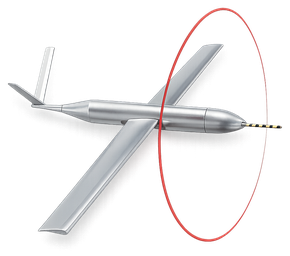
Well, I think there are a lot of applications. We are primarily innovating in the vehicle and the craft. So our first product is the X Plus One. It's a vertical takeoff and landing and high speed drone.
And it is, we call it the Tesla of drones. It's definitely a high end consumer product or maybe you would call an entry level commercial product. It does have a Tic-Tac controller in it. So you can do fully autonomous flight plans.
You can do mapping. And it's capable of all those aspects. We are working more on, we are working on another project, which we are fully capable of craft for commercial uses that actually has improved endurance and flight time to allow you to handle those commercial missions. But things like aerial mapping, obviously, precision ag, long distance like inspection for, for instance, pipeline and power line inspection, the X Plus One or this type of craft would be perfect for since it can travel at high speeds, you know, doing a survey, for instance, over a power line or transmission line.
And then if needed, it can transition to hover or a close in look at a hotspot or something. So I really think that the future of the industry in a lot of ways is going to go to VTOL platforms that have the vertical takeoff and landing capabilities as well as high speed. Are you going to be able to crack that one hour barrier with payload for VTOL that seems to be the bar that's set?
I think we'll, we'll be close to that. Right now we're looking at, you know, what exactly it's still in development, obviously. Right now we're, we're seeing that 45 minutes is pretty easy. An hour is going to be a little more difficult and may depend on the payload.
But that's, yeah, we're still looking at that. Now, one of the things, you're talking about a lot of operations that are beyond visual line of sight. And this is one thing as a manufacturer, I'm asking you this kind of a question. We're getting a little off track.
But, you know, you're designing for all of these kind of uses and, you know, the regulatory reality is that, you know, we can't fly beyond visual line of sight. And your estimation, I mean, when do you think that'll crack loose?
Or is it worth investing in developing technology to do all of these jobs that there aren't currently regulations for? And then maybe the timeline, you think that that it will be before we can fly beyond visual line of sight?
Sure. I think it's absolutely worth investing in. I still believe in the industry and that hopefully our regulators, I have hope that they will do the right thing and allow industry to drive innovation. I have hope.
These guys have optimism. I should have a song for that. Okay. Anyway, I'm sorry I stepped on you.
Go ahead. No, bro. So as far as the timeline for beyond visual line of sight, I think in the next, I mean, honestly, I think it could happen in the next three years. I do know people in Washington.
I know people who are on the task force and, you know, that has given me some more hope actually. So it's not, you know, I think there are some level heads that can, that also support the industry. Okay. I have hope again.
All right. So you are, you know, that's one of my questions I, you know, ask people, you know, when you're, it costs money to design, engineer, produce, you know, aircraft. And so that's one question I ask. It's a valid one, you know.
But okay. So anyway, I was going to ask one last question I want to know about shark tank. And I don't even know if you could talk about it because, you know, there's disclosure things, but I was going to ask which shark was the hardest sell and why, you know, sure. Well, actually, if you watch the episode, you might have seen it.
Definitely Cuban. He, he hung back there and that's kind of his strategy. Well, if you watch the show, he'll hang back and kind of be the last guy in and then swoop up and snatch the deal if you want it. And so in this case, though, was, you know, every other shark was was in on the syndicate.
Up to a set for him. And he kind of hung back there and said, you know what?
You guys are smart. You probably have other offers from V.C. Why do you buy you here?
And he was he was concerned that we were just there for the exposure. And my partner did a great job in responding to that on why the sharks are are the best partners for us. And in the end, that that's the deal. And the deal and Mark came in and they were all five in.
Yeah, that's interesting. Well, I'm kind of running. We're not really. I'm always talk a few minutes left, but there were other things I want to talk about.
I guess we'll kind of move on to the shark tank questions. But, you know, there was another product that you had that you were talking about and it was called a phone drone. And, you know, that looked like that's kind of an interesting concept. There have been a lot of questions swirling around about phone drone.
So without giving away the whole thing, maybe you can kind of tell us the thought behind the development of phone drone. Sure. So first of all, phone drone is a drone that basically uses your smartphone as the processor, as the camera, as the GPS and other sensors. So you don't have to have those components in the drone.
So everybody's got a smartphone. So now they can make their smartphone fly. That's kind of the message. And, you know, that that concept actually came to me since we, you know, we're developing other drones.
We do a lot of the hobbyist type drones and you're, you know, you buy these little control boards that have all those components in them. And I thought, you know what, those components are in a smartphone and everybody's got one of those. So it was just sort of a revelation for me. And so we started down the path of development on that.
And I got it far enough. I actually worked with the university here to help with the app and actually getting the technology to a point that we could say, yes, this is a doable project and we can actually get it out there. So that's when we started putting a kickstarter campaign together. And we actually have a kickstarter campaign up that's right now called Phone Drone Ethos on Kickstarter.
And it's doing pretty well. Our goal was $100,000 and right now we're almost at $200,000. So we still have 30 days left in the campaign. So check it out.
Yeah, that's impressive because I mean, if you've been following this, you know, there were a lot of, let's say drones on Kickstarter and it was real popular and people were getting a ton of money. And I think that the Kickstarter crowd, I want to just call them that for now, got a little bit more cynical and other systems were not getting funding. So that's kind of impressive that the Kickstarter program
you got going now is actually over. There have been some questions, like I said, and a lot of phone owners, with the exception of Windows phones, owners have said, what about the possibility of fly away?
Sure. So, you know, we're not going to say it's impossible, but we will say that, you know, I'm an aerospace engineer. My background is electronics. We are taking a lot of the concepts of redundant design, fail-safe design into consideration when we're designing this.
So that's the first thing. The other thing is the phone is well protected in some ground. So if it crashes or lands on something that you don't want to see, it's well protected. You can also use a lot of these spaces for your smartphone if you fly over water.
The other aspect of it is, you know, it works with some very low-cost Android phones. So there's $30 or $40 Android smartphones that you could put in this as the phone, and you'd be a little less concerned about leaving it if that were the case. So I think that is a real question that we have gotten a lot. And when it comes down to it, not everyone is going to be okay with sending their smartphone up in a drone.
And that's okay. We don't need everybody. But there are definitely, there is a market for it. There's definitely those out there who are willing to do it.
It is a cool concept, and a lot of people see that. Yeah, well, that was mainly that was my assistant, Veronica, was kind of like, you know, she just got the new iPhone 6S. I'm not putting my phone in a drone. I'm like, hey, you know, okay, whatever.
But, you know, if you answered that question and then also the compatibility questions, you know, it's kind of interesting. But I had another one. So, you know, you had a little less, a real gallon of the phone drone flying. How do you control a phone drone?
So you can control it from another smartphone or tablet. It will tether through Wi-Fi and you can directly control it, just like a lot of other drones are controlled from a smartphone. It will fly with only a single smartphone in the drone. The way that's worked is fully autonomous flight plan.
So you pull up our app, you set your path, you set your altitude, you set any events that you want to happen, snapping a picture or something along the way. And then obviously the return home is automatically coded in and then head go. And it will fly that flight plan fully autonomously by itself. So there's also a follow me function where we have through the tethering, so you need another device that you carry with you as the beacon.
And phone drone will actually follow that device at your selected altitude and it will track the GPS position of that beacon device. And I guess the, let's say the intended audience is kind of like everybody. You might see these at soccer games, real estate agents, the rest of the Christmas whatever birthday parties. Bar Mitzvahs, you'll see the phone drone being operated by normal everyday people.
Is that kind of the idea? That is the idea. It's a drone for everyone. It's also accessible because of the price point.
On Kickstarter right now they're around $250 for a ready to fly drone that's fully autonomous. And are any review units available?
I always ask that about everything when people come on the show. Whatever they talk about, I'm like, hey, you got one of those whaling ships, is that, you got to review it?
Well, go ahead, I'm sorry. We have about five units or so that we are using right now as our review units. And they are operational. So with Kickstarter you have to have an operational prototype in order to even get onto Kickstarter.
They don't allow dreams to get on. So that's an important aspect to mention. Well, that's a crusher because I have a bunch of vaporware that I want to put out now. Oh man.
Anyway, hey, can we get the website? So people listen to these podcasts. We've been doing them for three years and it's amazing. We get tons of downloads on this and keeps going.
Could you give us the website so people now and in the future can come and check you guys out and look at your progress? Absolutely. Our website is xcraft.io. X-C-R-A-F-T dot I-O.
And yeah, I thank you for this time that you've given here and I appreciate it. Hey, no problem. And we look forward to hearing about what you guys are up to in the future. So stay in touch and thanks for being a guest.
Thank you.