
UAS News Podcast — 2014-11-05
Audio not available on SoundCloud — full transcript below.
Transcript
Hello and welcome to the next installment of the UAS News Podcast series where we interview newsmakers and discuss the news and applications relevant to the global unmanned technologies community. I'm your program host Patrick Egan and this is where we would usually say hello to our big Texas hello to our co-host Gene Robinson but this week and as we speak Gene Robinson is on his way to the UN to talk about the humanitarian applications for unmanned aircraft systems
and I can't think of anybody better because Gene spent many moons in the field with this technology and the applications and so it's good that we've got somebody up there with some empirical knowledge representing a community.
I'm happy for that but that does what we're going to do is we usually talk about the news but now we're just going to launch in to the program and speak with our guest Mr. Ted McGeer from AeroVille. Ted's been around for a little while and I think this ought to be an interesting conversation get a little perspective on the industry and the technology. So Ted could you please maybe come on and tell the listeners a little bit about your background and yourself and how you became involved with unmanned aircraft systems.
Hello Patrick thanks for that. Hello to your listeners from the Columbia River Gorge where I'm at the moment wandering along the grass runway with my dog. So our headquarters in Houston Washington. So I'm running a little company of a dozen people out of a house here in southern Washington and we're developing a new unmanned aircraft primarily for civil applications something I've been trying to make happen for 25 years.
Hopefully this aircraft is going to help the economy that's going to make that a reality. All right so here we're going to flash back when you first got into this business 25 years ago what were they called?
Well I suppose at that point they were called unmanned aircraft they had been called drones for decades before that. Now I guess they're called drones again but a rose by any day would sell as sweet or as sour depending on your point of view. That's true I kind of judge people's let's say you know along the timeline the participation timeline when people are like I'm like well what were they called when
you first got well they were remotely piloted and you know they were remotely piloted vehicles or they were remotely piloted aircraft or they were unmanned UAVs or whatever the nomenclature keeps changing and that seems like the only progress we're getting out of all of the airspace integration initiative.
Well if we're on this subject briefly I'll digress and tell you that at one point 20 odd years ago we were involved with NASA. NASA realized of course that unmanned was a sexist term which is vitally important for them not to be sexist it's much more important to worry about those things and to worry about things like that space flight so consequently they decided the usage stand for uninhabited so they were uninhabited air vehicles if
you didn't count the microorganisms it might be on board. That's true but that's funny perspective that you say that because it's funny how encompassing this is but and I'm sure we'll get more into that now the funny thing is as you know I was talking a little bit before we went live a lot of people think this drone thing kicked off like last year you know I was at Brookstone and I got into drones
I bought myself a parrot and I started flying it around in the yard ah these drones are great and I get you know grad students all the time and they're like oh you know uh can we interview you Mr.
Egan we want to talk about all the potential firsts with this technology and when people are going to start doing stuff with the technology and I use you as an example a lot of the time you're my uh there's this great picture I keep telling people about and you sent it to me if I called uh call you the garage tinkerer and there's that picture with the uh the aerosol on the bench in the garage which
I want to get into but a lot of these people are like oh you know when are these when are we going to do this and when are we going to do that and I'm like geez you know a lot of that stuff's already been done and I want to talk about the transatlantic flight a little bit if you'll indulge us with that maybe you could go into the history of that when it happened and how that went down because a lot of people don't know about it oh the story is that in 1998 we flew an aerosol from Newfoundland to Scotland it was the first uh flight across the Atlantic by an unmet aircraft
and we did it to make a point about the practicality of flying small aircraft long distances at that point I thought this had been a few years after I started a company called in situ and um we were developing as you said an aircraft called aeroson which was intended to do long-range weather reconnaissance over oceans and remote areas going to hurricanes and so on and so I had been for several years doing small-scale trials with aerosols
and going to meteorologists saying like it's a pretty practical thing to do to fly these aircraft very long distances and we thought that in order to get credibility we better actually do that so we said well historically the way you demonstrate that uh you achieved a significant milestone is by flying across the Atlantic so if they're across the Atlantic it happened to be the first time an unmanned
aircraft had done that not by the way the first time a robotic aircraft had done it the first time a flight across the Atlantic had been done without anybody touching the primary flight controls that mean in the late 40s out of DC4 so now I know it took more it didn't take more than one attempt I heard there was a deal where you know the story kind of expanded that there was a I guess with wind and whatever else
and meeting the airplane and and things like that where there was there uh there was a little bit more drama to it than the story just related um yeah we lost um I forgot no two aircraft doing it uh it was um not because there was any doubt about the aircraft having enough range of endurance to get across the Atlantic it was rather because of through that whole period that we'd been developing the aircraft uh we were very badly underfunded uh there was never money to do proper engineering there was always money maybe to cobble together some aircraft to do some sort of meteorological trial
and the consequence of that is we were always flying uh prototypes that were kind of stuck together with baling wire and chewing gum and um reliability was a big problem because until you do proper engineering you don't get reliability it's still a huge problem within that aircraft uh so uh we had by that time done uh several hundred flight hours and tests and so forth and we had got to a failure rate of about one in 50 hours
and between you know generator belt coming on or some lubrication problem what have you well anyway so uh we had a 50 hour meantime between failure roughly and it only took 25 hours to cross the Atlantic so if you're okay if we bring four aircraft there are a chance of getting one across somewhere in the high 90s so that's pretty funny and you know it's kind of a uh interesting history that uh you know that
i think needed to get out there because uh the other one that really you know a lot of these uh stories that i read now in the news people are like oh you know these military the drones military and we're you know beating the plowshares and i'm like yeah you know that's not always the case and that that leads us to and the next aircraft that some people might know and i wanted to talk about the institute company
and your participation in that and the next aircraft that came out of that and what let's say the concept for for operations or missions was what the aircraft uh that were coming out of that company well we've done aerosol for a few years that's why instituent had started i started instituent in the early 1990s specifically to develop this idea of a very small but very long-range aircraft i mean long-range
and crossing the Atlantic right thousands of kilometers in a couple of days in direct that's what you need if you want to do hurricane reconnaissance and the motive by the way for doing hurricane reconnaissance is uh making institute measurements inside the storm uh institutes of course where the name of the company came from um is uh quite important for forecasting so this is why in the united states we have a squadron of c130s
you can watch on the discovery channel whatever hurricane hunters uh flying into hurricanes to get this information and that's fine except flying squadron c130s is a very expensive business and tens of millions of dollars per year so there's only a limited amount of that the united states can do and people in other threatened areas western deciliter the indian ocean and so on i can't afford it all
so there's no institute measurement going on there and the concept behind aerosol was less for hurricanes rather more routine other kind of observations if you use a small aircraft you get the data much less expensively and i think we demonstrated technically that that would be quite feasible and perhaps economically too but unfortunately the customer was um weather service weather service in this country
and weather service around the world and unfortunately governments are rather slow to make decisions i'm afraid you know all too telling so after five six years of doing that i've actually concluded that we weren't going to get anywhere and got out of the weather reconnaissance business that was in 1999 well here it is 15 years later and unfortunately uh very sad to say but i concluded at that time is being all too true uh noah is
now talking about their unmet aircraft program they've been doing it for years and it's like every year it's new it started from uh some fresh concept oh we can there's this wonderful new thing called unmet aircraft and let's think about we can do it what we did in the 90s is long forgotten anyway so uh that's why i got out of the weather business this would really be nice to find a private customer who uh really needs to get a job done
and if you demonstrate you can do it then you can have lunch and make a deal well after we crossed the atlantic there was a certain amount of publicity and people started calling could you do this could you do that and uh one of the more interesting sediments that came our way was to do imaging reconnaissance off tuna boats um there are hundreds of these boats around the world many of them are using helicopters to go find fish
and killing people at an absolutely astounding rate i mean if your chances of getting killed when you drove to work were the same as the chances these guys face when they get in the helicopter you wouldn't be going to work it's it's absolute madness so um we thought well okay maybe we can solve that problem that's what led to this aircraft now called scanning well you know it's uh flashing back to the aeroson thing the other thing with the aeroson
and i've had other scientists on the program and really you know people always ask me what's your favorite thing about the program and they go really when you get these guys spooled up on their specialty is really when it gets kind of exciting and it's interesting you talk about the hurricane thing because we've had a couple of scientists on the program been using the technology and they're like wow
you know you can you can gather data unprecedented data that you've never been able to grab before because you can't you know fly a manned aircraft uh you know a few feet off the water and i get to learn how hurricanes form and the energy comes out of the sea and yada yada yada but all of the rest of this so that's another thing that the unmanned aircraft affords the uh let's say researcher is data that
you wouldn't be able to get any other way and uh absolutely but but we were saying that exact thing 25 years ago and uh technically it's become somewhat easier to do what we were talking about 25 years ago um it's easier now than it was then but it's not uh the difference between night and day and what made the difference between night and day by the way uh was the advent of gps uh the advent of gps was circa 1990 uh since then um there have been significant steps
but still um we could have been doing hurricane retortions since low level high level whatever uh with aerosols in the mid-90s so uh you have to ask uh well why hasn't it happened now uh and a large part of the answer has to do with economics right well there's economics and there's also i mean there was another story about uh you know another hurricane story in aerosond and i think it was a partnership between nasa
and probably the weather no or something i forget but anyway they got a koa and maybe you remember this story they got a koa to fly an aeroson in a hurricane and they were out there getting this unprecedented data and they decided they were like ah you know we've never seen anything like this so we're going to sacrifice the vehicle to collect data and the faa revoked their koa because they went beyond the reserve fuel limit
and uh you know they're like that's it we're pulling your dance card and uh i mean i haven't heard that story but i can't tell you that the first hurricane reconnaissance by aeroson were flown in 2001 there was one off the east coast of the united states and there was one in taiwan and the first flights into uh the eyes of tropical cyclone were flown in 2005 again once went to fight in taiwan and one off the east coast united states
so again that demonstrated a long time ago right and a lot of these firsts were before and i want to kind of get into that because you always you know there's a quote about the the scan eagle you know yes that was developed uh and i hope everybody got that for more of the idea of doing some tuna fishing and you know before i had heard that you know i did a little research after that but i didn't realize that tuna
you know were worth so much but i guess that's why people right risk life and limb with the helicopters to go find the fish but um you know okay so so that brings us back to uh here you are you know here's our uh our you know quintessential grudge tinker and you're working on the uh the scan eagle and you want to do the fishing thing and maybe you could give us a little historical perspective of when that was going down um
and you know maybe some of this was all happening yeah this was all happening in the early 2000s and uh we got some private investors that range of investors who put up a couple million dollars and we developed the aircraft and uh there was interest as we expected from people in tuna fishing then there's we had a close partnership with company and geological survey and uh it looked like there was reasonable chance of those applications coming forward then mr bush invaded iraq
and the company very quickly became a defense contractor because that's where the market was it was a decision made by the board of directors of the company to concentrate on the military application um it was a reasonable business decision it was not one that i was thrilled about right consequence of that is that institute is now a defense contractor and we never did fly on a boat well it's funny how things change
and we we have spoken about that in the past and i'm sure you know you know you want to develop things you want to do things and people come along and there's partnerships or whatever else but i think it's important to establish that you know basically that thing was developed for uh let's say civilian purposes never achieved that goal but we're going to get there there's still there's still time on the clock
and we're going to get there the other thing is there's there's always you know when i first met ted on the small u.s arc which was kind of fun uh i don't know i you know i i spent most of my time grousing about the uh about the whole process and i wanted to get a little bit of your take on that but i also there was another quote where you talked about if we had this uh the regulations or lack of regulations that exist
now that you don't you you've said in the past that scanning wouldn't exist would you like to elaborate on that first for your listeners i'll explain what the arc was arc stands for advisory regulatory committee or some such thing and it was constituted by the fa uh this particular one in 2008 or thereabouts to discuss what the rules should be for flying small unmanned aircraft within visual range in other words exactly what people of flying radio control models have been doing for decades
and uh it seemed to be that this was not a hard problem all you had to do was go into the existing regs and uh you do a search for the phrase uh for recreational purposes only or whatever the actual term is and you do a delete value change the rules to accommodate flight within visual range um that's of course not what happened that you and i sat through any of those meetings uh where um suggestions just came out of the air
well let's have uh category a aircraft which weighs 1.3 kilogram and fly below 200 feet and category b aircraft which uh weighed up to 2.5 kilograms and fly below 400 feet on tuesdays and so on and there was no rationality to it at all it was it was well i suppose as uh supposedly bittsmark said uh you don't want to watch sausages being made you don't want to watch public policy being made well that's what supposedly was going on there although in the end uh the recommendations of the arc were thrown out
anyway and they about five years later and there's still no sensible rules well that's funny i think you've kind of uh captured the arc kind of in a nutshell and it was uh you know i try and tell people that you know they're like wow you know they're wringing their hands and you know well what should we do you know and uh even as let's say not so far back about a month ago i was at uh in dc for a beyond visual line of sight committee meeting that the faa put together
and you'll probably enjoy this so you know i got 30 different groups in the room and i said you know to the faa representatives now and i'm risking getting kicked off that committee for talking about this but i just thought it was kind of interesting you know we're going to go and do this work and i said well you know for the sake of you know expediency and getting a product out here is any chance the faa defined the visual line of sight envelope it still needs to be designed or defined
okay that's fine i think maybe for the benefit of your listeners they should understand why there is a regulatory problem um so and regulations are all about safety and they're about safety for three groups um people on board the aircraft people on board other aircraft and people on the ground right well so uh manned aircraft regulation primarily uh addresses the safety of people on the aircraft that's appropriate
and when you take care of them you pretty much take care of the other groups too uh well of course when i'm mad aircraft you don't have to worry about the people on uh the aircraft so the focus of regulation of safety uh shifts from the aircraft itself to what the aircraft might hit uh well all right now that's a uh uh very different kind of problem than the regulators thinking about uh because if you're worried about what the aircraft might hit uh then uh risk
and safety depend very much on where you're operating if you're operating over a city that's a very different prospect uh than operating out over desert if you're operating over city you need a much higher reliability than you do if you're operating over the ocean uh and that's what needs to be captured so the way i've suggested that it be done is that the rule should say nothing more than you must have liability insurance
and that means that uh insurance companies uh essentially take over the job of assessing risk now you might say uh well our insurance company is confident to do that uh my answer is probably more competent than the faa because they actually have some skin in the game they're not going to be perfect at it but the faa sure isn't either so uh this means that uh for any proposed operation you would have to look at what is the risk
and uh your insurance company would uh choose its premiums appropriately and what you would find with a matter crafted today is that if you were proposing to operate over the ocean over a desert you would find reasonable premiums and the insurance cost would be uh a small part of your overall operating cost if you were to say well let's go fly over the city for 12 taking pictures or whatever given the unmet aircraft reliability that has historically been uh demonstrated
you would find the premium is astronomical and you'd better go to local airport and hire a 172 so this would be a way of both dealing with the regulatory conundrum and addressing the economic issues well you know it's kind of funny is that because yeah it sounds like a pragmatist you might recall i i said basically that at the arc and people's eyes glazed over uh there was that there was a few times that uh
you know it was pretty there was a there was a couple of times where you know you were talking about you know looking at this kind of like like you said you know there's a probability and failures and where you're flying and you're kind of looking at it i would say taking a scientific approach and i think you lost everyone in the room there was that was one time it was another time you started talking about physics
and everybody glazed over people were running out of the room and there were a couple of other times where you made suggestions and people are like oh god this guy you know he's he's crazy and I'm like well i mean you know i mean these are good ideas but these are these are not particularly difficult concepts um we i'm sure on this program you have talked about sense and avoid since that is a matter that the fa tends to chat a lot
and for many i have heard it said by people who are supposedly authorities on the subject that solving the sense and avoid problem that is the mid-air collision problem is the fundamental barrier towards widespread adoption of unmanned aircraft well the fa calls for operation of unmanned aircraft with a level of safety equivalent to that of manned aircraft the so-called equivalent level of safety threshold
right so let's look at what the level of safety is with respect to mid-air collisions for manned aircraft particularly manned aircrafts who are using this so-called scene avoid paradigm and the answer is that for decades quite consistently um aircraft flying bfr supposedly avoiding each other by seeing avoid hit each other at exactly the rate you would calculate if you assume that scene avoid was completely ineffective that's the so-called maxwell molecule rate no pilot i'm not surprised by that no pilot i've ever talked to is surprised by that we all know how hard it is to spot traffic uh
so uh the equivalent level of safety has long since been achieved we can fly it random just like manned aircraft can well this is when you start making friends at the at the fa with it and then and these this is an elementary thing to calculate uh you can find the calculation done in a article that runs to less than a page in the journal of aircraft in 1983 these are simple calculations but in any event of scene avoid is a red herring for two reasons first if we want to talk about risk
you have to worry far more about hitting things on the ground than hitting things in the air for the simple reason that the ground is two-dimensional and the air is three-dimensional there is nowhere where the density of air traffic is so high and the density of stuff on the ground is so low that the mid-air risk even approaches the hitting stuff on the ground risk so i'm not when i'm flying mad aircraft i'm not too worried about hitting things in the ground
but i'm very concerned about what i'm flying over well you're you're always all about risk yeah and you are and i assure you when i'm when i'm when i'm flying around in my own aircraft i'm certainly not worried about hitting a mad aircraft i'm somewhat worried about hitting birds there's not a whole lot you can do about that no no it's an organic risk but now we're going to probably run a little long
and but that's okay sometimes uh people complain we used to do the podcasts with 45 minutes and people are like oh they're too long and i'm like well you just turn it off no it's too good okay well i can't help you well we can come back and talk about other subjects at other times we could but i did want to uh and and i would like to do that and i would like to invite you to come back down to the unmanned expo in late april if
you have time um because i i thought your last presentation was great you got so much knowledge to impart on the community and i think people need to know this history you got to know where you're from but i did want to touch on some good news for your company aerovel and the flex rotor and i don't know you know if you've been noticing that but we uh over here at sus news are in love with the flex rotor it's on everything we love it aircraft it's it's it's
you know some people who want to spend money or in a similar frame of mind well you know i'm trying man i think you uh i think you've got a winner i mean uh your your aircraft and i want you to talk about it your aircraft it looks good it uh it performs well it's got um you know it's got some things that we want to talk about feature wise and then also regulatory wise so maybe you can tell the audience a little bit about the flex rotor
well with flex rotor i would try to address what really is the fundamental problem for widespread adoption of unmanned aircraft which is economics they have been far too expensive all these decades and that continues to be the situation there are these little niches developing for electric quadcopters which can be operated economically but that's just about the only sector that makes sense we're interested in a very different sector which is again these long-range applications in remote areas doing hurricane reconnaissance two-day missions over thousands of kilometers doing geomagnetic survey covering thousands of kilometers doing reconnaissance from tuna boats where
you launch at dawn and you stay up all day and operate tens of miles out from the boat well we want to do this at a cost which makes sense for the tunisian captain or the geological survey company so that means operating at cost in the few hundreds of dollars per flight hour that's probably a factor of five or even ten better than has been achieved by aircraft and military service now one of the cost drivers has been stuff on the ground that is a scandal with aerosol we had aircraft was quite small aircraft has a three meter wingspan
and weighs say 15 kilos so it's huge for a single person to carry out and so forth but there is all this stuff that goes with it on scan eagle there was there is thousands of kilograms of stuff a catapult and the so-called skyhook that you need to operate the aircraft now those things enable applications which were not possible before you can take a scan eagle and you can operate it off a small boat
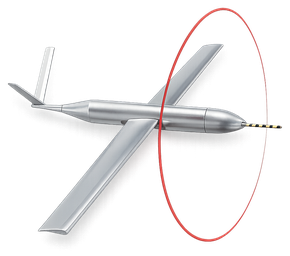
but there is this penalty today so with flex rotor we're trying to make a much lighter footprint and we do that with vertical takeoff and landing so flex rotor is what was known back in the 1950s as a tail sitter it has a very big propeller which um operates just like a helicopter rotor when the thing is doing lots of retrieval and then for efficient cruise it switches from nose vertical to nose horizontal
and it just has a very big propeller and can fly a long long way and you know that's and one other thing before we leave today is maybe you could give the listeners your your website and i we did we ran sqs news ran some of the highlighted some of the videos where you were taking off of the you've got the launch boat and whatnot and it was pretty pretty impressive so maybe you could give people the the website where they could learn more information about your company
and the flex rotor uh well it's aerovelco and so our website is aerovelco.com and the youtube channel is youtube.com slash aerovelco okay you go watch the videos on youtube yeah and you should go check them out they're pretty impressive i like the choices of music so that's pretty good uh the excellent uh you know i think this was an excellent podcast again yeah we'll probably have to have you on again as always tad it's a pleasure talking to
you i i really uh i dig the the way that you look at these problems it's more of a stigmatistic approach which i keep reminding people that we should maybe go that way it's a little little easier to back up if people ask questions than feelings but uh you know it's a hard changing public opinion anyway um that's all for this week again tad thanks for coming on and we'll talk to everyone next week
well thank you see you all right bye bye bye